
What we eat has an important influence on our health. Healthy diets can support wellbeing and help reduce the risk of cardiovascular diseases, cancer and other non-communicable diseases. But eating well is not simply a matter of knowing what is healthy or having enough willpower.
Price, availability, marketing, time, income and the food offered around us all influence what we eat. Effective prevention therefore involves both supporting people with clear and practical information and creating environments that make healthier choices easier, fairer and more accessible.
The recently launched JA PreventNCD prevention campaign builds on this approach. Its aim is to provide clear, accessible and evidence-based guidance on prevention while recognising that better health depends on both individual action and the conditions in which choices are made. The campaign therefore provides practical information for the general public on steps that can support health in everyday life, alongside evidence-based guidance for policymakers on the policies and wider conditions that can make healthier choices easier, fairer and more accessible.
To explore what this means for nutrition, we spoke with Katarzyna Brukało, PhD, Associate Professor, Coordinator for Cooperation with the European Union in the Field of Public Health Programmes at the Medical University of Silesia in Katowice, and Thematic Coordinator for Nutrition in JA PreventNCD, about what healthy eating means in practice, how our food environments shape our choices, and what Europe can do to support healthier diets.
There is an enormous amount of information about nutrition available today, and it can sometimes feel confusing or contradictory. What is the most important thing you would like people to understand about healthy eating and prevention?
One of the most important messages is that healthy eating does not have to be perfect or complicated. There is so much information available that people can understandably feel overwhelmed, but prevention does not require following an extreme diet or getting every meal right.
What matters is the overall pattern of what we eat over time. Eating more vegetables and fruit, whole grains, beans, lentils and nuts, drinking water more often instead of sugary drinks, and limiting foods high in salt, sugar and unhealthy fats can all support long-term health.
It is also important to remember that nutrition is about much more than body weight. A healthy diet can support cardiovascular health, reduce the risk of some cancers and type 2 diabetes, and contribute to energy, concentration, growth and overall wellbeing.
The key is to focus on realistic changes that fit people's lives and can be maintained over time. Even one manageable change can be a useful place to start.
Healthy eating is often presented as an individual responsibility. But is it really easy for people to know what is healthy and what is not, and why is it important to consider the food environment around us?
People make choices about what they eat, but those choices are shaped by the conditions around them. Price, availability, time, income, marketing, family routines and the food offered in schools, workplaces, shops and other settings all influence what is realistic in everyday life.
Even identifying the healthier option is not always straightforward. Food packaging can contain a lot of information, and people are often comparing several products quickly. Clear and understandable front-of-pack nutrition labelling can therefore be a useful tool, helping people interpret nutritional information and compare products more easily.
JA PreventNCD and WHO have explored this issue in a freely available webinar on front-of-pack labelling and healthier food environments. It is a good example of how policy can help people make more informed choices.
But labelling alone cannot create a healthy food environment. If healthier food is unaffordable, unavailable or less convenient, choices may still be very limited. Marketing, particularly to children and young people, can also shape preferences and what people come to see as normal.
So prevention needs both: reliable information that people can understand and surroundings that make healthier choices genuinely possible.
Instead of asking only, "Why aren't people choosing healthier food?", we should also ask: "Are we making healthier choices easy to identify, easy to access and realistic to make?"
Food choices are also shaped by commercial interests. How do commercial determinants influence our food environments, and what does this mean for effective prevention policy?
Commercial influences are an important part of the environment in which people make decisions about food. They extend well beyond traditional advertising. Product formulation, pricing, packaging, placement, portion sizes, sponsorship and digital promotion can all influence what people see, buy and come to regard as normal.
This is particularly relevant for children and young people, who are increasingly exposed to marketing through social media and other digital platforms.
We also need to consider how commercial actors may seek to influence public health policymaking, and how potential undue influence and conflicts of interest can be appropriately identified and managed.
In June, I contributed to the organisation of a pilot training-of-trainers workshop in Warsaw, developed through JA PreventNCD together with WHO. Participants from public administration, academia and public health explored commercial determinants of health, strategies used to influence policymaking, conflicts of interest and the importance of transparent, evidence-informed governance.
This is important because effective prevention is not only about identifying the right policy measure. We also need to ensure that decisions are transparent, that conflicts of interest are appropriately managed, and that public health evidence and the public interest remain at the centre of policymaking.
How is JA PreventNCD working to improve food environments and nutrition-related prevention across Europe?
One of the strengths of JA PreventNCD is that nutrition is not addressed through one isolated activity. Different parts of the Joint Action look at the same prevention challenge from different perspectives, and part of my role as a cross-cutting theme coordinator is to help connect that work and identify where these approaches can reinforce one another. For me, the added value of this cross-cutting role is precisely in making those connections visible. Nutrition cannot be addressed in isolation, because healthier diets depend on many interconnected factors – from regulation and public procurement to local food environments, social inequalities, commercial influences and healthcare systems.
Our work on regulation and taxation looks at policy measures that can shape healthier food environments, including food reformulation and portion sizes, public food procurement, product labelling, fiscal measures and action on harmful marketing.
Our work on healthy living environments takes prevention into communities and everyday settings, looking at how access to healthy products can be increased and how healthier environments can be created where people live, learn and work.
Other areas bring equally important perspectives. Our work on social inequalities considers equity and health literacy, including whether people can access, understand and act on health information. Our work on monitoring helps us understand risk factors, food environments and whether policies are producing meaningful change. Our work on Health in All Policies considers how decisions across different sectors can support better nutrition and health, while our work on identifying individuals at risk complements population-wide action with more personalised prevention.
The value comes from connecting these perspectives. Nutrition prevention is not only about what people eat. It is also about what information people receive, what products are available and affordable, how commercial and social environments influence them, whether policies reach everyone fairly, and how we know whether our actions are working.
No single intervention can address all of this. JA PreventNCD gives countries an opportunity to look at these dimensions together and build prevention approaches that are more effective, equitable and sustainable. The cross-cutting structure is specifically intended to connect work that would otherwise risk remaining in separate silos.
Nutrition matters throughout the life course. How do our needs and food environments change from early childhood through adulthood, and why is it important for prevention to take this longer view?
Nutrition influences health throughout life, but the environments shaping what we eat change as we move from infancy through childhood, adolescence and adulthood.
The foundations begin very early. Nutrition in the first years of life supports growth and development and can influence longer-term health. Breastfeeding is one important part of this, which is why JA PreventNCD is strengthening breastfeeding support through initiatives such as Baby-Friendly Community Health Services and BreastFEEDucation. Importantly, this work treats breastfeeding support as a shared responsibility involving healthcare services, workplaces, communities and policy, rather than simply telling individual mothers what they should do.
As children grow, schools and childcare settings become particularly important food environments. The food available there, access to drinking water, meal standards and exposure to marketing can shape preferences and habits. Adolescence then brings greater independence alongside increasing exposure to peers, digital media and commercial influences.
These issues do not disappear in adulthood. Workplaces, shops, restaurants, household income, caring responsibilities and the time people have available all continue to influence what and how we eat.
Later in life, nutrition also becomes increasingly important for maintaining muscle mass, physical function and independence, while the prevention and early identification of malnutrition become particularly relevant. This illustrates why nutrition policy needs to follow people across the whole life course, rather than concentrating only on selected stages.
This is why prevention cannot focus on one intervention at one age. We need supportive food environments across the places where people grow, learn, live, work and age.
Many of the decisions that influence what we eat are not made by health ministries. How important is a Health in All Policies approach, and how does this connect with the idea of a wellbeing economy?
It is essential, because many of the strongest influences on nutrition sit outside the traditional health sector.
School food involves education and local government. Fiscal measures involve finance. Food production and supply involve agriculture. Marketing involves consumer protection and digital regulation. Working conditions affect whether people have the time and opportunity to eat well, while social policy influences affordability and food security.
Health in All Policies asks us to recognise these connections and consider health and equity when decisions are made across government, rather than expecting the health sector to address the consequences afterwards.
The wellbeing economy perspective broadens this further by asking how policies contribute not only to economic activity, but also to people's health, wellbeing, equity and the sustainability of communities.
This can help sectors find shared objectives. Better public food procurement, for example, can support healthier diets while also contributing to sustainability and responsible public-sector purchasing. Prevention becomes stronger when different sectors can see how action contributes to their own objectives as well as to better health.
A recurring theme in prevention is equity. How can nutrition policy improve health without increasing blame, stigma or inequalities?
We have to start by recognising that people do not have the same opportunities to eat healthily. Income, working conditions, caring responsibilities, local food availability and other circumstances can all affect what is affordable and realistic.
If we frame unhealthy diets simply as poor individual choices, we ignore those conditions and risk blaming people for circumstances they may have limited power to change.
Equity therefore needs to be considered from the beginning of policy design. We should ask who benefits from a measure, who may face barriers and whether some groups need additional support.
The objective should not only be to improve diets on average, but also to reduce unfair and avoidable differences in health. Healthy eating should be a realistic option for everyone.
Looking beyond JA PreventNCD, what would success look like for nutrition prevention in Europe?
For me, success would mean that healthier eating becomes easier in everyday life, not because we continually ask individuals to make a greater effort, but because the environments around them increasingly support health.
It would mean nutritious food being affordable and accessible. It would mean healthier options becoming normal in schools, hospitals, workplaces and other public institutions. It would mean consumers having clear and trustworthy information, children being better protected from harmful marketing, and prevention policies being developed with equity and transparency from the beginning.
Success would also mean moving beyond isolated good practices. Europe already has a great deal of knowledge about effective prevention. The challenge is increasingly not only to identify effective approaches, but to create the political, organisational and financial conditions that allow them to be implemented at scale, properly evaluated and sustained over time.
JA PreventNCD creates an important opportunity for countries to test approaches, strengthen monitoring, exchange experience and build knowledge that can continue to inform prevention after the Joint Action itself has ended.
Sustainability and the transfer of successful approaches into regional, national and European policy are therefore an important part of the bigger picture.
Ultimately, I think success is a Europe in which the healthier choice increasingly becomes the easier choice, and where the opportunity to eat well does not depend on someone's income, education or where they live.
Nutrition illustrates a central message of JA PreventNCD's prevention campaign: individual choices matter, but those choices are shaped by the conditions around us.
Effective prevention means giving people the information and support they need while creating environments that make healthier choices easier, fairer and more accessible for everyone.
Explore nutrition and prevention
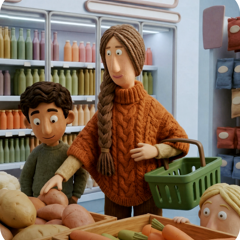
Nutrition for you and your community
Learn how everyday food choices affect health and explore realistic ways to support healthier eating.

Nutrition for policymakers and government officials
Explore how policy can create healthier and fairer food environments and make nutritious choices more accessible.