
Moving our bodies regularly can support our physical and mental health and help reduce the risk of cardiovascular diseases, cancer and other non-communicable diseases. But physical activity does not only mean sport, structured exercise or going to the gym. Walking, cycling, wheeling, playing, gardening and movement during everyday activities all count.
Our opportunities to move are also shaped by the environments around us. Time, health, safety, accessibility, transport, workplaces, schools and the design of our neighbourhoods can all influence how easy it is to make movement part of everyday life. Effective prevention therefore involves both supporting people to be more active in ways that work for them and creating environments that make movement safer, easier and more accessible.
The recently launched JA PreventNCD prevention campaign builds on this approach. Its aim is to provide clear, accessible and evidence-based guidance on prevention while recognising that better health depends on both individual action and the conditions in which choices are made. The campaign therefore provides practical information for the general public on steps that can support health in everyday life, alongside evidence-based guidance for policymakers on the policies and wider conditions that can make healthier choices easier, fairer and more accessible.
To explore what this means for physical activity, we spoke with Martina Serra, European Project Manager at the WHO French Healthy-Cities Network (Réseau français Villes-Santé) and Thematic Coordinator for Physical Activity in JA PreventNCD, about how movement fits into everyday life, how our surroundings influence opportunities to be active, and what Europe can do to make active living possible for more people.
Physical activity is often associated with sport, running or going to the gym. But is that too narrow a way of thinking about it? What actually counts as being physically active?
Yes, I think we sometimes make physical activity sound more complicated than it needs to be. Sport and structured exercise are important, but they are only part of the picture.
Walking or wheeling somewhere instead of taking the car, cycling to work or school, playing with children, gardening, dancing, taking the stairs, doing household tasks or simply moving more during the working day can all contribute to physical activity.
This is important because people may sometimes feel that activity only “counts” if it is intense,organised or done for a specific purpose. But some activity is better than none, and even relatively small increases in movement can support health. The recommendations give us useful goals to work towards, but people do not need to reach them immediately for movement to be worthwhile.
Physical activity also supports much more than fitness or body weight. Regular movement can contribute to cardiovascular health, muscle and bone strength, sleep, energy and mental wellbeing, as well as help people maintain mobility and independence as they age.
So rather than asking whether we are doing “enough” exercise, a useful starting point can be to ask: where could movement fit naturally into my everyday life? It should be realistic, enjoyable and appropriate to each person's health, abilities and circumstances.
If we want people to move more, how much does the way we organise everyday life matter? What does an environment that naturally supports physical activity actually look like?
It matters enormously because our everyday routines can either create opportunities to move or remove them.
Think about something as simple as walking to school, work or the shops. Whether that is a realistic option depends on distance, pavements, traffic, road safety, lighting, accessibility and whether people feel comfortable and safe along the route. Public transport matters too because journeys by bus, tram or train often include walking or wheeling at either end.
The same applies to schools and workplaces. Children are more likely to move when there are safe and attractive places to play and when movement is part of the school day. For adults, long periods of sitting can become built into working routines. Parks, playgrounds, green spaces and community facilities can create further opportunities, but only if they are accessible, affordable and welcoming to the people who live nearby.
So physical activity policy should not only tell people to move more. We need to look at the places, policies and systems people encounter every day and ask whether they actually support movement.
For me, that is one of the most important shifts in perspective. Instead of asking only, “Why aren't people more active?”, we should also ask: “Have we created everyday environments that make it easy, safe, affordable and attractive to move?”
Cities and municipalities make many decisions that affect how people move every day. Where do you see the greatest opportunities for local action?
The local level is particularly important because municipalities influence so many of the environments where everyday movement actually happens.
Urban planning and transport are obvious examples. Safe and connected walking, cycling and wheeling routes can make it easier for people to build physical activity into journeys they already need to make. Accessible public transport can also reduce car dependence and support more active journeys. Parks, playgrounds, green spaces and public areas can provide opportunities for movement, play and social interaction.
Schools are another very interesting setting. The environment around a school influences whether children and families can safely walk or cycle there, how much space is available for play, and how streets are used by the wider community.
This is something we are exploring within JA PreventNCD through work on car-free areas around schools. In France, for example, Réseau français Villes-Santé has been working with cities including La Rochelle, Lyon and Marseille as part of wider European work examining these environments. The aim is not simply to remove cars, but to better understand how changes to the space around schools can affect health, physical activity and the wider environment.
Local action is also about understanding the people who use these places. An intervention can look good on paper, but municipalities need to consider whether it works for children, older people, people with disabilities, parents, residents and others who experience the space differently.
That is one of the strengths of working through cities: you can see very clearly how decisions about transport, public space, education and health come together in people's everyday lives and how they can reinforce one another.
How do we know whether people are actually moving enough, and why does better monitoring matter for prevention?
Good prevention depends on good information. If we want to understand physical activity, we need to know not only whether people take part in organised exercise, but how movement and inactivity fit into their lives more broadly.
One particularly interesting JA PreventNCD pilot is looking at physical activity, sedentary behaviour and sleep together as behavioural risk factors for cancer and other NCDs. Population-based adult samples from different European countries are being included using a harmonised approach, with common protocols, training and age- and gender-balanced recruitment.
I think the combination of physical activity, sedentary time and sleep is particularly valuable because it gives us a more complete picture of everyday behaviour. Someone may, for example, take part in regular exercise while also spending very long periods sitting during the rest of the day. Looking at these behaviours together can tell us more than asking only whether somebody “exercises”.
Comparable data across countries can also help us identify patterns, understand where action may be needed most, and ultimately assess whether policies and interventions are making a difference.
More broadly, JA PreventNCD's monitoring work is exploring existing and emerging approaches at individual and clinical level, including their potential benefits, barriers to wider use and questions around technical feasibility, ethics and transferability between European countries.
Monitoring is therefore not simply about collecting more data. The value comes from producing information that can help us understand patterns of behaviour, identify need and priorities and better support decision-making.
Not everyone has the same opportunities, abilities or needs when it comes to physical activity. What does an inclusive approach to active living look like?
It starts by recognising that there is no single way of being active that will work for everyone.
For children, movement may primarily mean play, active travel and opportunities during the school day. Adolescents may need activities that reflect their changing interests and growing independence. For adults, time, working conditions, caring responsibilities and daily travel can become important barriers. For older people, movement can play an important role in maintaining strength, balance, mobility and independence.
People with disabilities or chronic conditions may need adapted opportunities or additional support. Income can affect access to organised sport and recreation, while neighbourhood conditions determine whether people have safe places to walk or spend time outdoors. Women and girls may face particular safety concerns or social and cultural barriers.
This means that simply making an activity “available” is not always enough. We should ask who can actually access it, who feels safe and welcome there, and who may still face barriers to participating.
An inclusive approach therefore combines support for individuals with action on the wider barriers around them. Opportunities should be safe, affordable, accessible and appropriate for different ages, abilities, cultures and circumstances. It also means recognizing that some people may need different types or levels of support to have genuinely comparable opportunities to be active.
The goal is physical activity for all, but that does not mean expecting everyone to do the same thing or providing everyone with exactly the same support.
Policies that help people move more can also affect transport, climate, mental wellbeing and social connection. How important are these wider benefits when making the case for action?
They are extremely important because physical activity is connected with many objectives that extend far beyond the health sector.
If a city makes it safer and easier to walk, cycle or wheel, that can support physical activity, but it can also contribute to more sustainable transport and reduce car dependence. High-quality parks and public spaces can provide opportunities for movement while supporting social connection, mental wellbeing and community life. Safer streets can particularly benefit children and older people. Accessible environments can support independence and inclusion.
This is why physical activity is such a good example of Health in All Policies. Transport, urban planning, education, environmental policy, workplaces and local government can all influence how much people move, even though promoting physical activity may not be their primary objective.
Rather than asking these sectors simply to “do something for health”, we can identify shared objectives. A transport policy that supports walking and cycling can advance mobility, climate and health goals at the same time. A well-designed public space can support movement, social connection, accessibility and quality of life.
This also connects strongly with the wellbeing economy approach. If we consider people's health, wellbeing, equity and the quality of the places where they live alongside more traditional economic measures, the value of these kinds of investments becomes much clearer.
As Thematic Coordinator for Physical Activity, you work across very different parts of JA PreventNCD. What does that cross-cutting perspective add?
Physical activity is a very good example of why cross-cutting coordination is useful. There is not one single part of JA PreventNCD responsible for addressing physical inactivity.
Across the Joint Action, physical activity is being approached from several levels. This includes monitoring physical activity, sedentary behaviour and sleep; looking at national physical activity policy approaches; testing interventions in local communities to create more activity-friendly environments; and developing activities and tools that can support individuals at increased risk or people undergoing rehabilitation.
There are also important connections with social inequalities, because people's opportunities to be active are not equally distributed, and with Health in All Policies, because many of the decisions that influence movement are made outside the health sector.
My role as a cross-cutting theme coordinator is therefore to help make those connections visible, bring people working on related issues together and identify opportunities for different parts of the project to learn from and reinforce one another.
The approaches can look very different, from measuring movement objectively to changing a school environment or supporting somebody during rehabilitation, but they are contributing to different parts of the same question: how can we create the conditions for more people to be active, understand where the barriers are, know whether our approaches are working, and provide additional support where it is needed?
Having this wider perspective helps us see these different strands not as separate activities, but as complementary parts of a broader approach to promoting physical activity. Meaningful population-level change requires action from the individual level all the way through communities, cities and national policy.
Looking ahead, what would Europe look like if we really succeeded in making physical activity a normal and accessible part of everyday life?
For me, success would mean that being active requires less planning and deliberate effort because everyday life itself gives people more opportunities to move.
It would mean children being able to walk, wheel or cycle safely to school and having attractive places to play.
It would mean adults having opportunities to move during the working day and being able to include walking, cycling or public transport in everyday journeys. It would mean older people feeling safe and confident moving around their communities, and people with disabilities having genuinely accessible public spaces and activities.
This is also particularly relevant as we come to the end of European Mobility Week, whose 2026 theme is “Mobility for Everyone”. Making active and sustainable mobility a realistic option means considering whether people can access it regardless of their income, where they live, their gender or their abilities. It also means recognising that mobility needs change throughout the life course: children, young people, adults and older people do not necessarily experience the same opportunities or barriers.
It would also mean looking beyond sport when we think about physical activity policy. Sport remains important, but population-level prevention also depends on transport systems, neighbourhoods, schools, workplaces, healthcare, public spaces and services that support movement as part of ordinary life.
JA PreventNCD is already working across several of these levels, from monitoring and national policy to local environments and individual support. The longer-term challenge is to learn from these approaches, understand what works in different contexts and ensure that effective practices can be sustained and, where appropriate, adapted and scaled up beyond the Joint Action.
Ultimately, I think success would be a Europe where movement is not something people constantly have to add to their lives because it is already built into the way we live, travel, work, learn and spend time together.
Physical activity illustrates a central message of JA PreventNCD's prevention campaign: individual action matters, but our opportunities to act are shaped by the environments around us.
Effective prevention means helping people find realistic and enjoyable ways to move while creating places, services and policies that make active living safer, easier and more accessible for everyone.
Explore physical activity and prevention
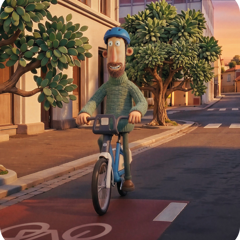
Physical activity for you and your community
Discover realistic and enjoyable ways to make movement part of everyday life, with activities that suit your needs and circumstances.
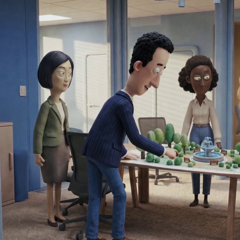
Physical activity for policymakers and government officials
Explore how policy can shape streets, schools, workplaces and public spaces to make active living safer, easier and more accessible for everyone.